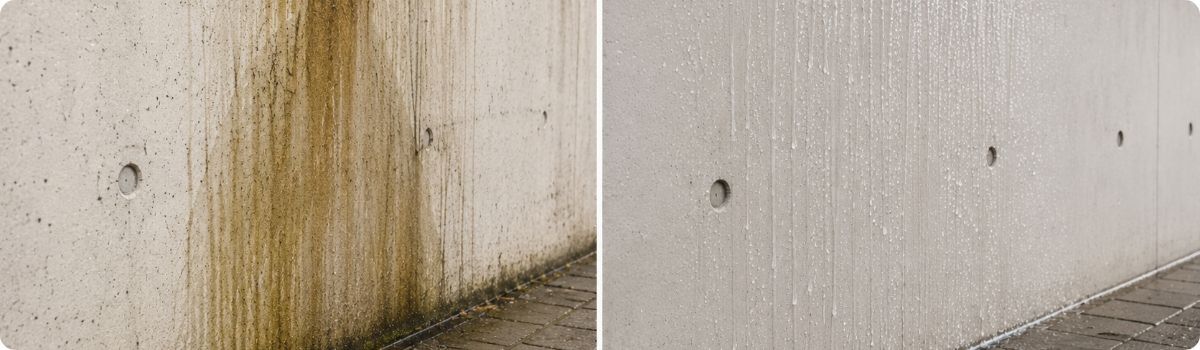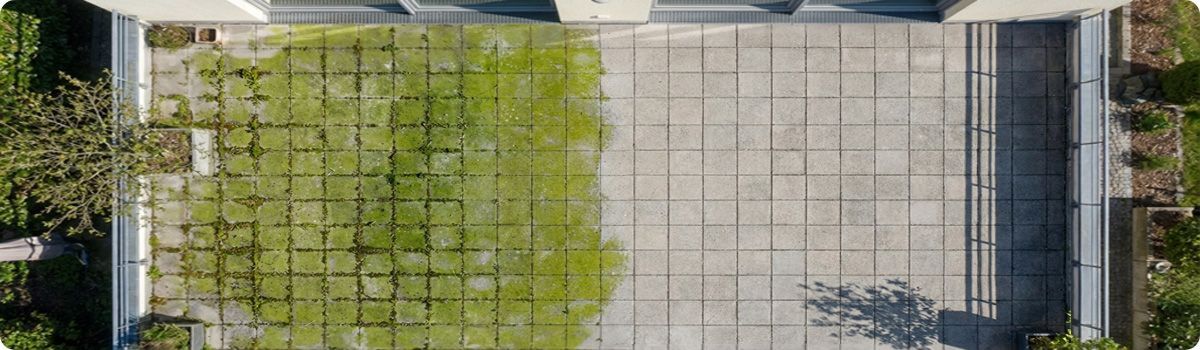
Removing green deposits is a recurring challenge for many property managers, housing associations, municipalities and maintenance companies. What starts as a slight discoloration on tiles or paving can quickly develop into a stubborn layer of mosses and algae. This not only affects the appearance of an area, but also safety.
Especially on terraces, galleries, walkways, stairs, entrances and commercial premises, green deposits form a structural maintenance issue.
In this blog, we explain what green deposits are, why they form, how to effectively remove green deposits from tiles and why a specialist green deposit cleaner makes the difference.
What are green deposits?
Green deposits mainly consist of mosses and algae. These are micro-organisms that develop on damp surfaces with little sunlight. They easily attach to porous materials such as concrete, patio tiles, paving stones and facades.
The growth is influenced by:
- Moist conditions
- Limited ventilation
- Shaded areas
- Accumulation of organic material such as leaves
- Poor drainage
When mosses establish themselves, they retain moisture in the surface. This creates a microclimate in which further growth is stimulated. This explains why removing green deposits becomes increasingly difficult if action is not taken in time.
Green deposits on tiles: why paving is extra sensitive
Green deposits on tiles are one of the most common forms of outdoor contamination. Paving and concrete are sensitive due to the structure of the material.
On locations such as:
- Terraces under trees
- Driveways on the north side
- Galleries with limited sunlight exposure
mosses and algae have more opportunity to develop.
If removing green deposits is postponed, the contamination penetrates deeper into the surface. This makes mechanical cleaning more intensive and increases the risk of damage.
Why removing green deposits is important
Green deposits are more than an aesthetic problem.
1. Safety
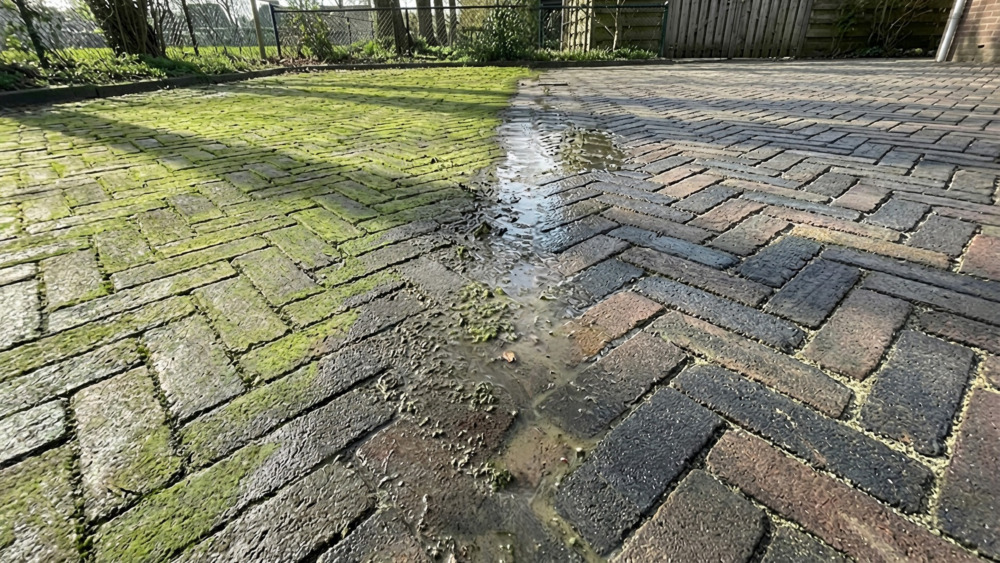
Wet mosses and algae make surfaces slippery. This increases the risk of slipping, especially at entrances, galleries and public areas.
2. Appearance
A surface with visible contamination looks less professional and poorly maintained. For commercial buildings and residential complexes, this is undesirable.
3. Material preservation
Long-term growth can contribute to accelerated ageing of paving and joints.
4. Cost control
Removing green deposits at an early stage prevents heavier cleaning methods and higher maintenance costs.
When is the best time to remove green deposits?
The best period to remove green deposits is in spring or early autumn. During these months, temperatures are favourable and there are more dry periods available.
Optimal conditions:
- At least 48 hours of dry weather
- Temperatures above approximately 10 °C
- No rain during or immediately after application
Under these conditions, a green deposit remover can work optimally and deliver long-lasting results.
Moss or algae: what is the difference?
In practice, moss and algae are often used interchangeably, but there is a difference.
- Algae usually form a thin green layer on the surface.
- Mosses are thicker and root themselves more firmly into porous materials.
Do household products such as vinegar or soda work?
Household remedies are often mentioned when removing green deposits. Think of vinegar, chlorine or soda. Although these products sometimes have a temporary effect, there are important disadvantages:
- Damage to plants and soil life
- Damage to joints
- No long-term preventive effect
- Potential environmental impact
For professional use, these solutions are not suitable. A specialist green deposit cleaner offers a controlled and long-lasting approach.
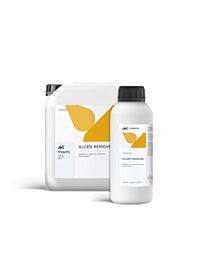
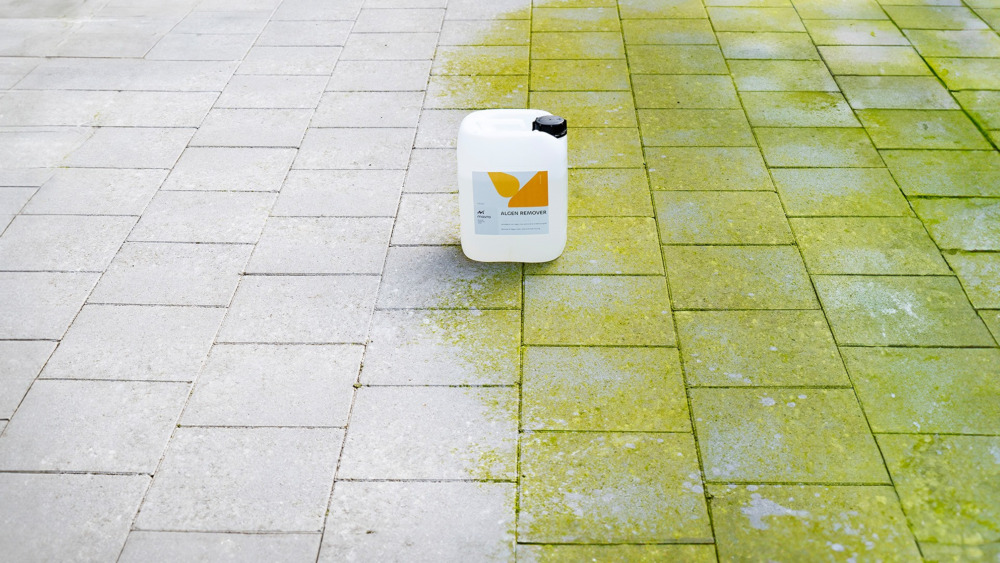
Professional removal of green deposits with Algen Remover
For sustainable results, a high-quality green deposit remover is essential.
Algen Remover from Mavro is developed for professional use and helps effectively remove algae from surfaces such as:
- Patio tiles
- Paving stones
- Concrete floors
- Facades
- Fences
- Other porous surfaces
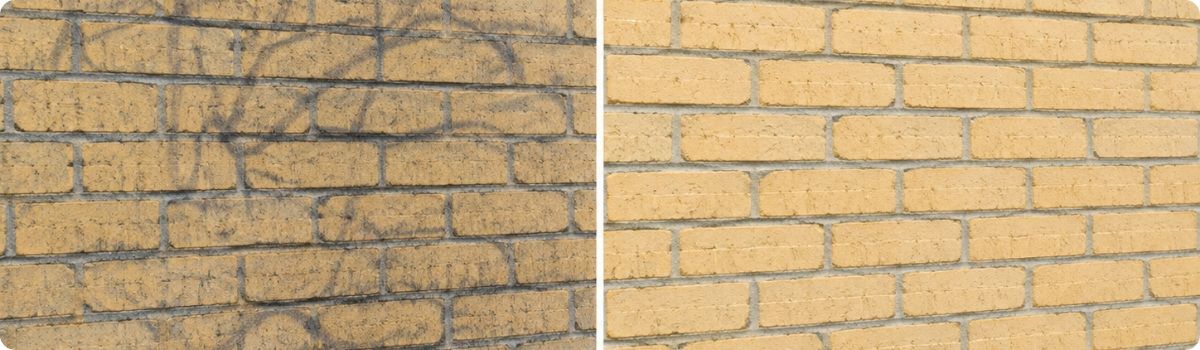
The formula penetrates deep into the contamination and not only removes visible deposits, but also bacteria and yeasts that promote regrowth.
Benefits of this green deposit cleaner
- Legally approved biocide (approval number: 16071N)
- Long-lasting effect
- Typically one treatment per season
- No rinsing required
- No high-pressure equipment needed
- Biodegradable
- Does not leave a visible film
This makes removing green deposits part of an efficient maintenance plan instead of a recurring problem.
Step-by-step: removing green deposits from tiles
- Remove loose dirt and leaves.
- Dilute to a working concentration of 25 ml per litre of water.
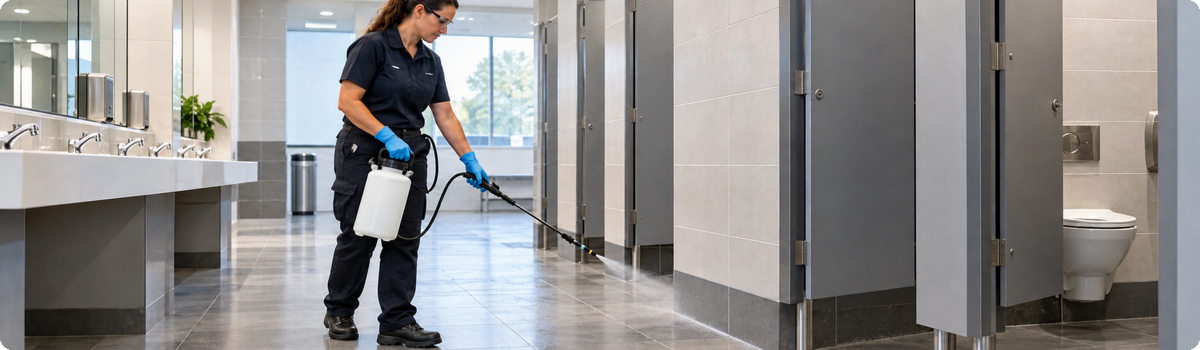
- Apply the green deposit cleaner evenly using a low-pressure sprayer or watering can.
- Allow the product to work for several days until the green deposits have disappeared. Do not rinse.
The active ingredients do the work without intensive scrubbing. This saves labour time and prevents damage to the surface.
Preventing green deposits: preventive maintenance
Structural maintenance significantly reduces regrowth.
Recommended measures:
- Ensure proper drainage
- Remove leaves and organic debris regularly
- Maintain joints between tiles
- Apply a green deposit remover preventively
By removing green deposits periodically, the surface remains clean and safe for longer.
Frequently asked questions about removing green deposits
How often should you remove green deposits?
In professional environments, one treatment per season is usually sufficient, depending on location and moisture exposure.
Can you remove green deposits without scrubbing?
Yes. A high-quality green deposit cleaner works based on chemical action rather than mechanical force.
From recurring contamination to manageable maintenance
Removing green deposits requires a targeted and professional approach. By understanding the cause, choosing the right timing and using an effective algae remover, maintenance becomes manageable and sustainable.
With a specialist green deposit cleaner such as Algen Remover from Mavro, you choose long-term protection of tiles, paving and outdoor surfaces.
Do you want advice on application within your maintenance project? Our specialists are happy to help. We make chemistry work.