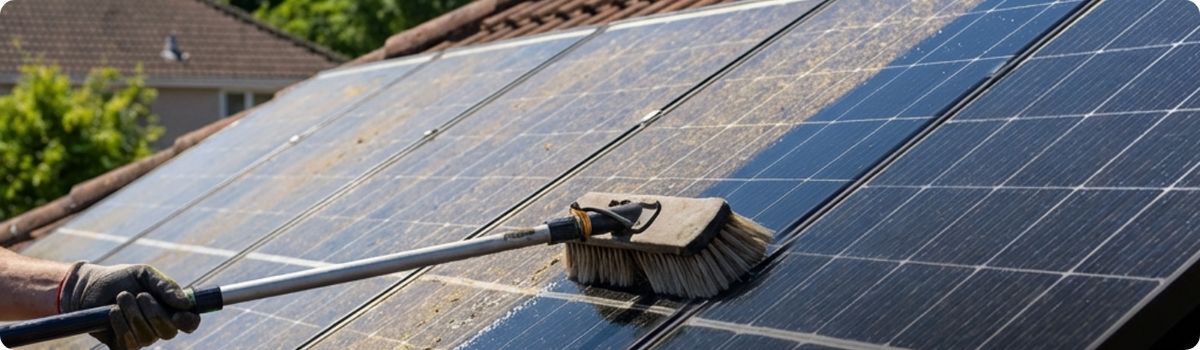
Solar panels perform best when sunlight can reach the glass surface properly. That may sound obvious, but in practice every panel is exposed to dirt. Dust, sand, pollen, bird droppings, insect remains, leaves, green deposits and limescale residues can adhere to the surface. Rain washes some of it away, but not everything disappears on its own.
For homeowners, cleaning solar panels is often about improving yield and keeping the roof looking well maintained. For local service providers, window cleaners and maintenance companies, it is also about working safely, preserving materials and achieving a professional result. A solar panel is not an ordinary window. It contains glass, coatings, seals, aluminium frames, wiring and sensitive connections. That is why cleaning requires a calm and controlled approach.
In this blog, you will read when cleaning solar panels is worthwhile, how to do it safely and when a specialist cleaner such as Solar Clean offers added value.
Why solar panels get dirty
Solar panels are outdoors all year round. As a result, they are constantly exposed to weather conditions and environmental contamination. In residential areas, this often involves dust, pollen, bird droppings and leaves. In agricultural areas, fine dust from fields, yards or stables is often added to the mix. In urban areas, atmospheric pollution plays a bigger role. When trees are located around the roof, you will often see more leaf residue, resin, algae and bird activity.
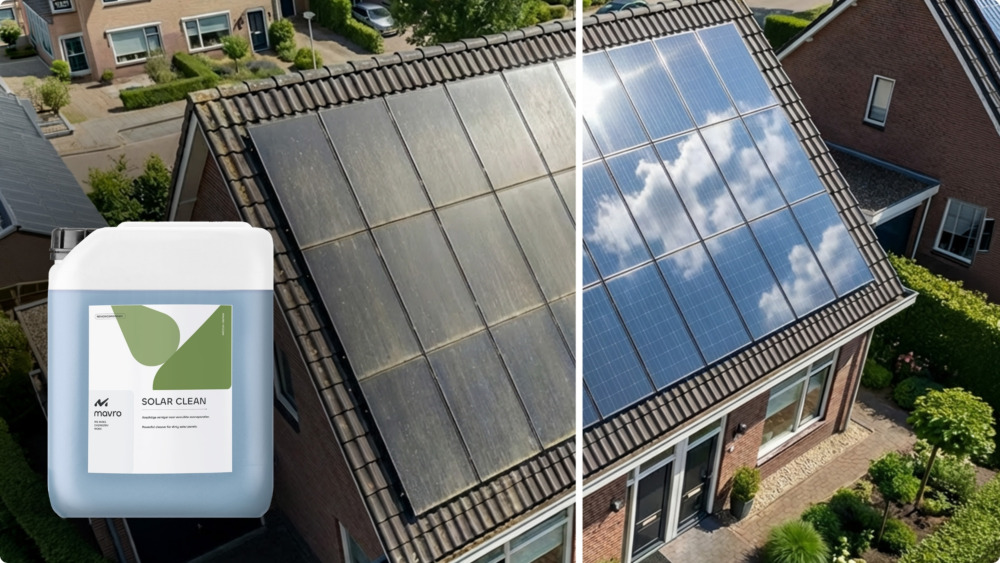
Some of this contamination is washed away by rain. Even so, dirt often remains along the lower edge of the panel. Rainwater runs towards this area, where contamination dries onto the surface. Over time, a dirty edge can form that holds on to new deposits. Bird droppings and insect remains also often adhere firmly to the glass. This type of contamination usually does not disappear completely through rain.
Dirt on solar panels mainly affects light transmission. The heavier the contamination, the less light reaches the panel properly. The impact differs per situation. Location, angle of inclination, rainfall, dust exposure and maintenance all determine how quickly contamination becomes noticeable. That is why proper inspection is more important than a fixed cleaning frequency.
When should you clean solar panels?
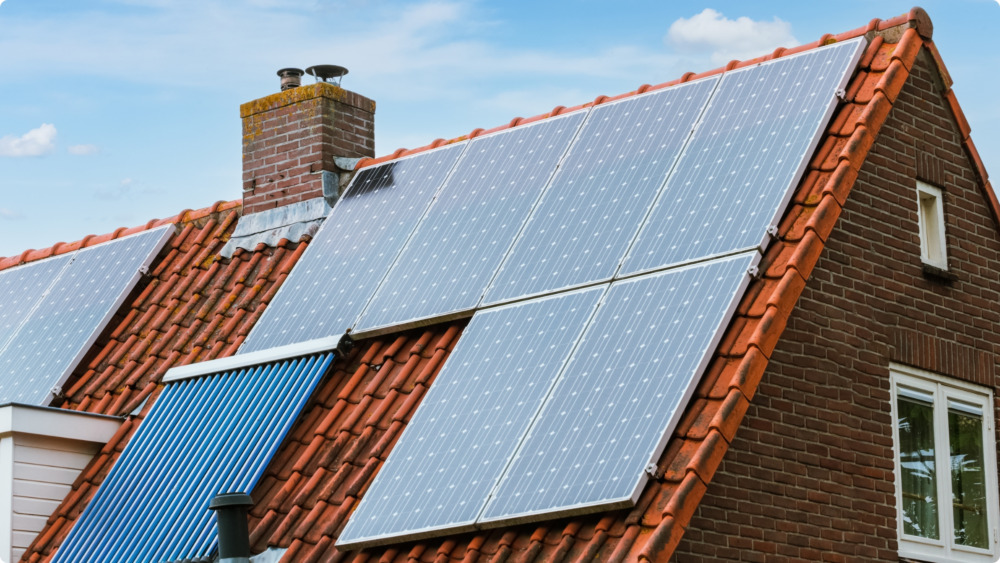
The beginning of spring is a logical moment to inspect solar panels and clean them where necessary. Autumn and winter often leave behind leaves, sand, bird droppings and atmospheric deposits. By cleaning before the sunny season, the installation starts the months with increasing sunlight and longer daylight hours in a clean condition.
An additional inspection is useful after a long dry period. Dust is then not washed away as effectively and can build up. Cleaning is also advisable after heavy bird activity or visible contamination. Pay particular attention to bird droppings, green deposits, limescale residues, dust trails and dirty edges at the bottom of the panel.
Panels in an open environment with a sufficient angle often stay clean for longer. Panels near trees, roads, industry, agriculture or flat roofs usually need attention more often. With a low angle of inclination, water drains away more slowly. This means dirt remains on the surface more easily and dries onto it sooner.
For professionals, it is wise to include solar panels in periodic maintenance rounds. Not as a standard task without inspection, but as a visible checkpoint. This allows the customer to receive targeted advice based on the actual contamination and accessibility of the installation.
Can you clean solar panels yourself?
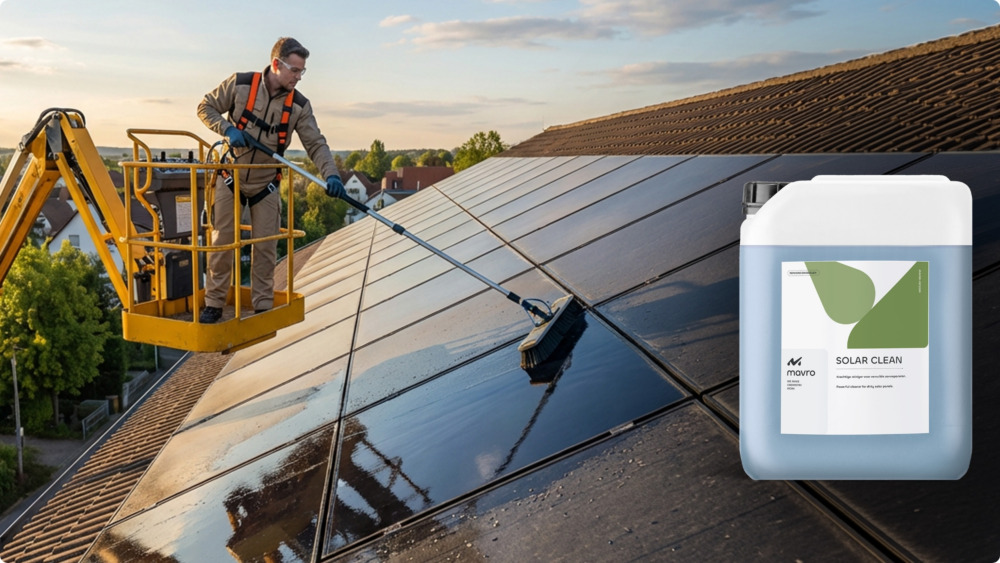
That mainly depends on safety and accessibility. If the panels are located on a low, flat and safely accessible roof, light cleaning can sometimes be carried out by the owner. If the panels are on a sloping roof, at height or in a difficult-to-reach location, a professional cleaning company is the better choice.
The risk of falling is the biggest danger when cleaning panels yourself. An investment in solar panels deserves careful maintenance, but never at the expense of safety. Do not use an unstable ladder, do not work on wet roof tiles and never step on the panels. Solar panels are not designed to carry weight. Leaning on panels can also place stress on the glass, frame or mounting points.
Switch off the installation according to the instructions of the installer or manufacturer before you start. Work calmly and avoid contact with damaged cables or connections. If you are unsure about the condition of the installation, have a specialist take a look first.
The best time of day
Do not clean solar panels in full sun. A hot panel causes water and cleaner to dry quickly. This can leave streaks and makes controlled working more difficult. A large temperature difference between warm glass and cold water can also be unfavourable for the material.
Preferably choose a cloudy day, early morning or a moment when the roof is not hot. These conditions give you more control over the contact time and rinsing.
What should you use to clean solar panels?
For light contamination, use clean water or osmosis water in combination with a soft brush. Osmosis water contains almost no minerals. This means fewer limescale residues are left behind after drying. That is important on glass, because dried minerals can cause streaks or stains.
Always use soft materials. A suitable soft brush helps loosen dirt without putting unnecessary stress on the glass. Scouring pads, hard brushes, scrapers and abrasives do not belong on solar panels. Do not use a pressure washer either. High pressure can force water under edges and damage components.
For stubborn contamination, water alone is often not enough. Think of bird droppings, green deposits, limescale residues, insect remains and baked-on dust. In that case, a cleaner specifically developed for solar panels can help. This cleaner must be suitable for the glass and for the materials around the panel.
Why Solar Clean is suitable for professional maintenance
Solar Clean has been developed for cleaning solar panels and solar cells. The product is intended for contamination such as limescale residues, green deposits, dust, bird droppings, insects and other deposits. It dries streak-free and has an antistatic effect. This makes the product interesting for maintenance companies that want to deliver a neat result without an aggressive approach.
Solar Clean can also be used on materials on and around solar panels. Think of glass, aluminium, zinc, copper, PVC and silicone. This is practical, because a cleaner often also comes into contact with frames, edges and adjoining materials during the work.
Solar Clean is pH-neutral and contains no harmful or aggressive substances. The product is fully biodegradable and plant-based. This makes Solar Clean a good fit for professional maintenance where safety, material preservation and an environmentally conscious working method are important.
View Solar Clean here.
How to use Solar Clean in practice
Good cleaning starts with preparation. Check accessibility, weather conditions and the condition of the panels. Remove loose dirt carefully with water and a soft brush. This prevents loose sand or coarser dirt from being moved unnecessarily across the glass.
Dilute Solar Clean 1:10 to 1:20, depending on the contamination. Use a stronger solution for heavier contamination and a higher dilution for light contamination. This allows you to tailor the cleaning process to the situation and avoid unnecessary product use.
Apply the solution with a low-pressure sprayer or soft brush. Allow the product to work for a few minutes and work it in with a soft brush. Rinse the surface with clean water and allow it to dry.
Common mistakes when cleaning solar panels
The first mistake is cleaning with too much force. Solar panels do not require hard pressure, but the right combination of water, gentle movement and a suitable cleaner. Hard scrubbing increases the risk of scratches and damage.
The second mistake is working in full sun. The surface then dries quickly, which can cause streaks. The contact time of the cleaner is also shortened. As a result, you have to work harder to achieve the same result.
The third mistake is using products that are not intended for solar panels. Aggressive cleaners, abrasives and household products can leave residues or affect materials. Therefore, only use products that are suitable for this application.
The fourth mistake is forgetting the lower edge. This is exactly where dirt often remains. Pay extra attention to the lower strip of the panel, without pressing on the panel or forcing anything under the edges.
What does this mean for maintenance companies?
Cleaning solar panels fits well within professional facade maintenance, window cleaning and specialist cleaning. Customers are increasingly asking for complete building maintenance. Solar panels are part of that, provided the cleaning is carried out safely and professionally.
For local service providers, Solar Clean offers a practical solution for contamination that is difficult to remove with water alone. The application is straightforward, the dilution is clear and the product is suitable for the materials commonly found around solar panels. This helps professionals work consistently and clearly explain to customers what they are doing.
A professional approach starts with inspection. Not every panel needs to be cleaned equally often. Look at the environment, contamination, accessibility and safety risks. Only recommend cleaning when it is useful. This builds trust and delivers maintenance that suits the customer’s situation.
How to keep solar panels clean
Clean solar panels when there is visible contamination, when the panels are located in a contamination-sensitive environment or when you want them to start the spring season clean. Check extra carefully for bird droppings, green deposits, dust edges and prolonged dry weather.
Clean safely, calmly and with soft materials. Do not work in full sun. Use osmosis water or clean water for rinsing. Avoid high pressure, abrasives and hard brushes. Pay attention to the lower edge, because this is where dirt often remains.
For stubborn contamination, choose a cleaner that has been specially developed for solar panels. Solar Clean is intended for solar panels and solar cells and helps with contamination such as limescale residues, green deposits, dust, bird droppings and insect remains. Use the product according to the current product information, with the correct dilution, short contact time, soft brush and clean rinsing.
This keeps cleaning solar panels a manageable maintenance task. The customer gets a well-maintained result. The professional works safely and efficiently. The panel receives the care that suits a sustainable installation.
Questions or need product advice? Contact us via info@mavro-int.com or +31 418 680 680.