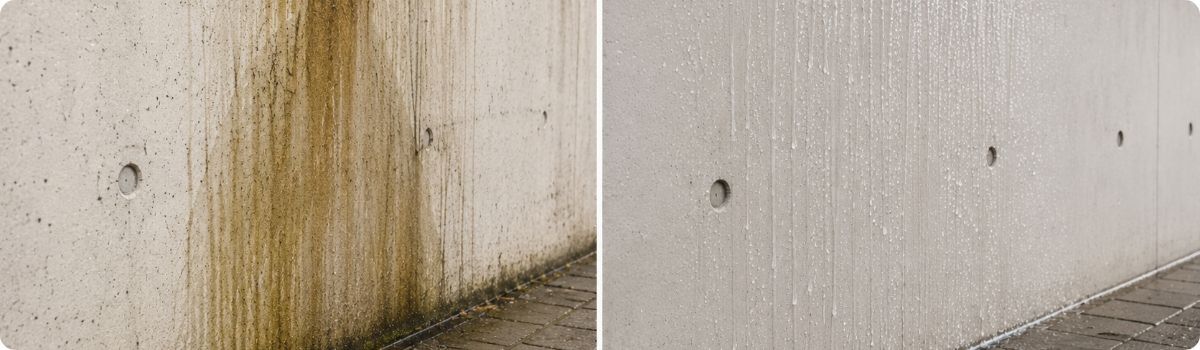
Urine nuisance in public spaces causes more than just an unpleasant smell. On porous surfaces such as concrete, natural stone and brick, urine can penetrate deep into the material. This causes stains, discolouration and contamination that become increasingly difficult to remove.
For municipalities, property managers and maintenance contractors, this leads to recurring cleaning costs and public areas that quickly look dirty again. Simply removing urine often does not provide a lasting solution. As long as the surface continues to absorb moisture and dirt, the problem will keep returning.
An anti-urine coating can help make vulnerable mineral surfaces easier to manage. In this blog, we explain how urine contamination develops, where the main problem areas are and which requirements a suitable urine-resistant coating should meet.
Why urine nuisance in public spaces keeps returning
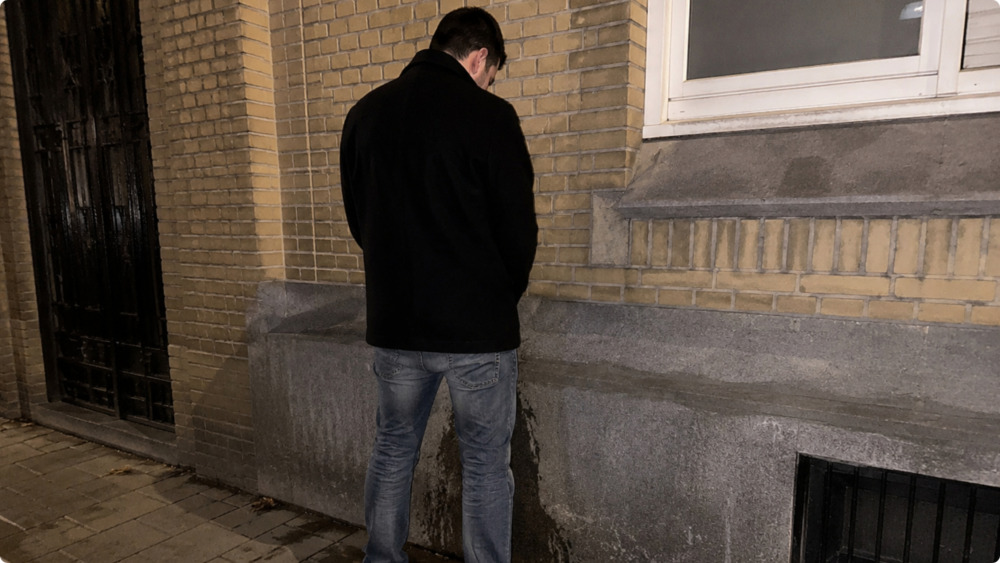
Many materials used in public spaces have a porous structure. Concrete, brick, natural stone and unglazed tiles contain small openings that allow moisture and contamination to penetrate.
When a surface is regularly exposed to urine, odorous substances and contamination can accumulate in these pores. The contamination is then no longer only on the surface, but also inside the substrate. This makes removing urine from concrete or natural stone increasingly difficult.
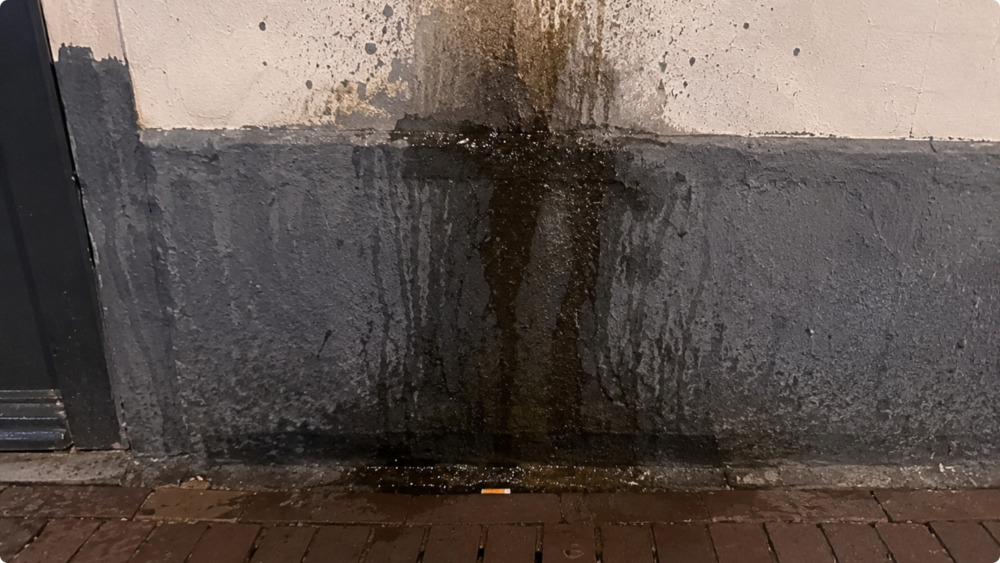
The effects often only become clearly visible over time. Dark patches, streaks, discolouration and dirty edges may develop. The smell can also become noticeable again after every damp period.
Surface cleaning then provides temporary improvement, but does not address absorption by the substrate.
Where does urine nuisance commonly occur?
Urine nuisance mainly occurs in sheltered places with little social control. However, the problem is not limited to nightlife areas. Stations, parking facilities and other busy locations may also be affected.
Common problem areas include:
- stations and stops;
- car parks and bicycle parking facilities;
- tunnels and underpasses;
- porches and entrances;
- shopping areas and squares;
- public toilets;
- event sites;
- façades around hospitality areas;
- waste collection points;
- walls, corners and façade plinths.
At these locations, maintenance is often reactive: as soon as contamination becomes visible or noticeable by smell, another cleaning round follows. Structural protection of the porous surface can help make maintenance more manageable.
Why removing urine alone is not enough
Fresh contamination can usually be removed relatively easily from a non-porous surface. A porous surface is different. Urine can quickly penetrate the material, leaving part of the contamination behind after cleaning.
The longer urine remains present, the greater the risk of:
- persistent odour nuisance;
- dark stains and discolouration;
- visible run-off marks;
- contaminated joints and edges;
- recurring cleaning costs;
- an untidy appearance of the surroundings.
Repeated intensive cleaning can also put stress on the substrate. Strong cleaning agents and high mechanical pressure are not suitable for every type of stone, concrete or pointing.
A sustainable approach therefore involves more than cleaning. The absorption of new contamination must also be reduced.
What does an anti-urine coating do?
An anti-urine coating protects a substrate against the penetration of urine and other liquid contamination. Its purpose is not to eliminate the need for cleaning, but to prevent each new contamination from penetrating deep into the material.
On a properly protected surface, urine remains closer to the outer surface of the substrate. This makes it easier to remove during routine maintenance.
A urine-resistant coating is particularly valuable at locations where urine nuisance regularly returns and complete prevention is not realistic. Examples include façade plinths, sheltered corners, tunnels, alleys and car parks.
What requirements should a urine-resistant coating meet?
Not every coating or impregnation treatment is automatically suitable for use in public spaces. The right choice depends on the substrate, the desired appearance and the conditions at the location.
Suitable protection should preferably:
- be suitable for porous mineral substrates;
- reduce the absorption of liquid contamination;
- reduce dirt adhesion;
- make the surface easier to clean;
- preserve the original appearance as much as possible;
- allow water vapour to escape from the substrate;
- be suitable for indoor or outdoor conditions;
- fit the existing maintenance method.
The degree of porosity is also important. An impregnating treatment must be able to penetrate the substrate. Very dense, glazed or previously sealed surfaces therefore require a different assessment than open concrete or porous natural stone.
Nitoguard Stone as a solution against urine contamination
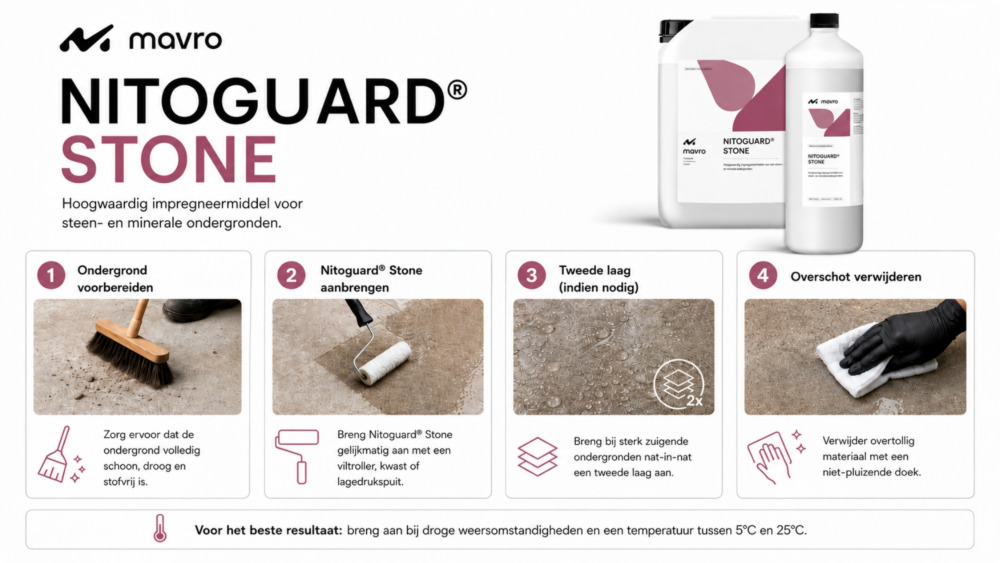
Nitoguard Stone is a transparent, water-vapour-permeable impregnating agent based on fluoropolymers. The product has been developed for porous mineral substrates and gives the treated surface hydrophobic and oleophobic properties.
This means that the surface becomes water- and oil-repellent. Liquid contamination is therefore less able to penetrate the pores, while dirt adheres less strongly to the substrate.
These properties make Nitoguard Stone suitable as an anti-urine coating for vulnerable mineral surfaces in public spaces. The treatment does not form a thick, conspicuous finishing layer. The material penetrates the porous substrate, largely preserving its original appearance.
Nitoguard Stone can be applied to suitable porous substrates such as:
- concrete;
- natural stone;
- brick;
- mineral façade plinths;
- porous tiles;
- other absorbent stone-like surfaces.
The benefits for municipalities and property managers
For municipalities and managers of public spaces, technical protection is not the only consideration. A solution must also fit existing cleaning rounds, maintenance contracts and budgets.
Nitoguard Stone helps make the surface easier to manage. The main benefits are:
- reduces the absorption of urine and other liquid contamination;
- gives porous substrates water- and oil-repellent properties;
- reduces dirt adhesion;
- makes urine contamination easier to remove;
- remains transparent after application;
- largely preserves the appearance of the substrate;
- remains water-vapour-permeable;
- can be applied specifically to problem areas;
- supports a planned maintenance approach.
The anti-urine coating does not prevent public urination itself. It does, however, reduce the impact on the surface. This allows a problem location to be maintained more quickly and with greater control.
Remove existing urine contamination first
Before applying an anti-urine coating, existing contamination must be removed as thoroughly as possible. The substrate must be clean, dry and free from loose dirt.
Pay particular attention to:
- absorbed urine and odorous substances;
- grease and other organic contamination;
- lime and mineral deposits;
- old impregnating agents or coatings;
- loose parts and damaged joints;
- residues of cleaning agents.
Contamination left in the substrate may become more difficult to reach after treatment. Thorough pre-cleaning is therefore essential for the final result.
Check the porosity of the substrate
Nitoguard Stone must be able to penetrate the pores of the substrate. Therefore, check beforehand whether the surface is sufficiently absorbent.
Absorption may be limited on very dense, polished, glazed or previously treated surfaces. Product that cannot penetrate the substrate may remain on the surface and cause an uneven result.
Porosity may also vary within a single location. For example, a repaired section of a façade may react differently from the original material. The same applies to different types of natural stone, concrete or pointing.
A test area is therefore always recommended.
Why a test area is important
A test area shows in advance how the substrate reacts to the anti-urine coating. This prevents surprises during the full application.
A representative test area can be used to check:
- whether the substrate absorbs sufficient product;
- how much product is required per square metre;
- whether the appearance of the surface is preserved;
- whether colour or gloss differences occur;
- how water and contamination behave after treatment;
- which cleaning method is most suitable after treatment.
The test area also provides a shared reference point for the client, manager and applicator. This makes it clear in advance what result can realistically be achieved.
How much Nitoguard Stone is required?
The coverage of Nitoguard Stone ranges from 2 to 20 m² per litre. This wide range is due to the strong influence of the porosity and structure of the substrate on absorption.
An open or rough concrete surface can absorb considerably more product than a dense type of stone. Weathered areas, joints and repaired sections may also react differently.
Therefore, do not calculate the required volume solely on the basis of the total area. Use the test area to determine the actual consumption per square metre.
Targeted treatment of problem areas
It is not always necessary to treat an entire façade or structure. When urine nuisance occurs only in specific places, targeted treatment may be sufficient.
Examples include:
- the lower strip of a façade;
- sheltered corners next to an entrance;
- walls around public toilets;
- plinths in car parks;
- walls in tunnels or underpasses;
- areas around waste containers.
Where possible, treat complete architectural surfaces or logically defined sections. This prevents visible transitions between treated and untreated surfaces.
Maintenance after applying an anti-urine coating
A protected substrate still needs to be cleaned. Remove new urine contamination as quickly as possible. The shorter the contamination remains present, the lower the risk of odour nuisance, visible deposits and dirty edges.
Use a cleaning method suitable for both the substrate and the applied protection. Start with the least aggressive method that provides sufficient results. Unnecessarily strong chemicals or heavy mechanical stress can shorten the service life of any protective treatment.
After application, record:
- which surfaces were treated;
- which product was applied;
- how much product was used;
- when the treatment was carried out;
- which cleaning method is recommended;
- when the surface will be inspected again.
This makes the urine-resistant coating part of a structural maintenance plan rather than a one-off measure.
Anti-urine coating as part of a broader approach
Urine nuisance in public spaces often requires several measures. Good lighting, supervision, clear communication and sufficient public toilet facilities can help reduce the cause.
However, not all contamination can be prevented. Protecting vulnerable surfaces is therefore also important.
Nitoguard Stone makes porous mineral substrates water- and oil-repellent. This reduces the chance of urine and other liquid contamination penetrating deep into the material. At the same time, the surface remains transparent and water-vapour-permeable.
Nitoguard Stone therefore provides a practical anti-urine coating for municipalities, property managers, maintenance contractors and other organisations responsible for clean and well-maintained public spaces.
Would you like to know whether Nitoguard Stone is suitable for a specific substrate or problem location? Contact us at info@mavro-int.com or +31 418 680 680.