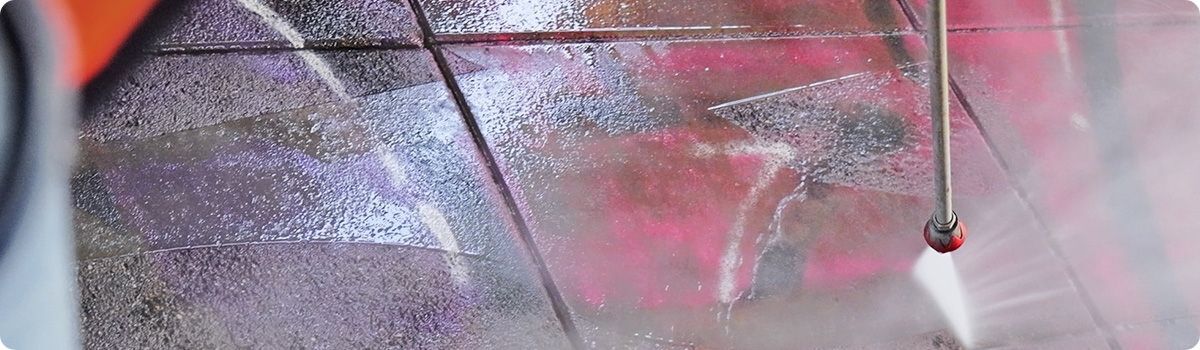
How to remove graffiti? Complete guide for facades, walls and other surfaces
Graffiti can sometimes be a form of art, but in many situations it is mainly seen as contamination. When graffiti appears on a facade, wall, tunnel or commercial building, it often has an immediate impact on the appearance of a building or public space. It can create a messy impression, an unsafe feeling, additional maintenance costs and in some cases even a decrease in property value.
For municipalities, property managers and maintenance companies, graffiti is therefore a recurring problem. As soon as graffiti becomes visible, there is often a need to remove it as quickly as possible. The faster graffiti is removed, the smaller the chance that new tags or graffiti will appear.
However, removing graffiti often proves to be more difficult in practice than expected. Graffiti is applied using different types of paint, coatings and permanent markers. These materials are specifically designed to adhere well and remain visible for a long time.
In addition, the surface plays a major role. Graffiti on smooth surfaces such as glass or metal is usually easier to remove than graffiti on porous materials such as brick, concrete or natural stone.
In this blog, we explain:
- why removing graffiti is often difficult
- how different surfaces affect the cleaning process
- how to remove graffiti step by step
- what graffiti shadow is and how to prevent it
- why protecting surfaces with an anti-graffiti coating is a smart choice
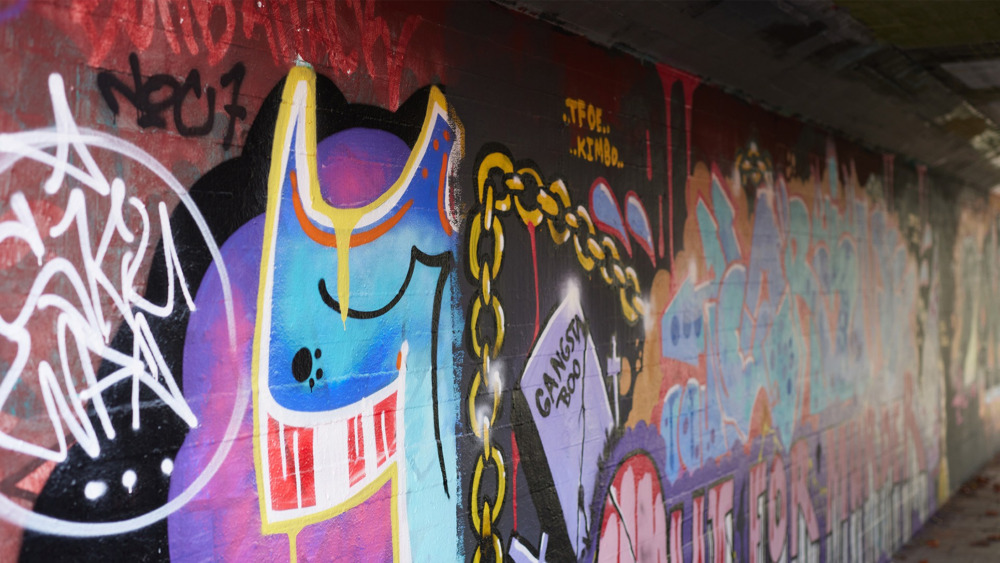
Why removing graffiti is often more difficult than expected
Many people first try to remove graffiti with a pressure washer or a standard cleaning product. In some cases, this seems to work temporarily. The top layer of paint disappears and the graffiti appears less visible.
In reality, a large part of the paint often remains in the surface. This is because graffiti usually consists of materials specifically designed to remain visible for a long time.
Common types of graffiti materials include:
- spray paint
- lacquer paint
- permanent markers
- inks and dyes
These products contain pigments and binders that strongly adhere to the surface. Especially on porous materials, these pigments can penetrate deep into the substrate.
When using only water or high pressure, you often remove only part of the paint. The rest remains in the pores of the surface, causing the graffiti to remain partially visible.
For effective removal, a combination is usually required of:
- a suitable graffiti remover
- sufficient dwell time
- the correct cleaning technique
The influence of the surface when removing graffiti
The surface on which graffiti is applied plays an important role in the removal process. Not every material reacts the same to cleaning or chemical products. That is why it is important to first assess what type of surface you are dealing with.
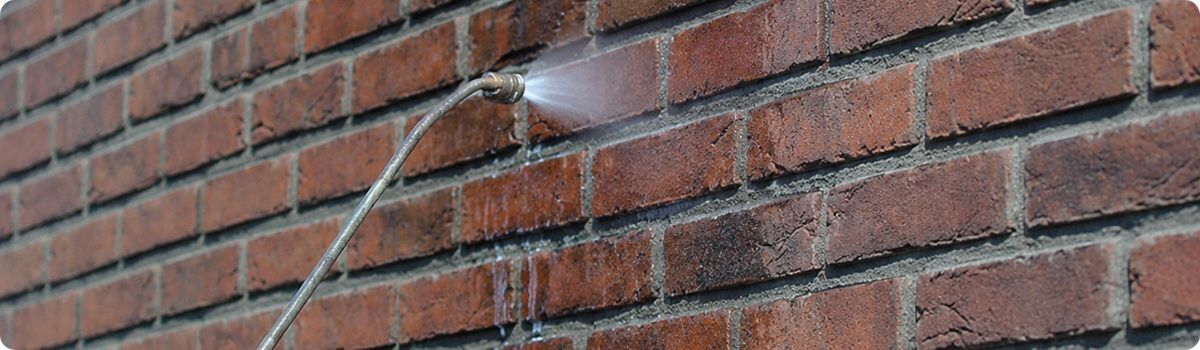
Removing graffiti from brick and masonry
Brick and masonry are among the most common surfaces where graffiti is applied. Think of building facades, commercial properties, tunnels or walls along railway lines.
Brick is a porous material. This means that paint and pigments can easily penetrate into the pores of the stone. When graffiti has been present for a longer time, removal can therefore require more effort.
When cleaning brick, it is important to consider the structure of the material. Overly aggressive cleaning can cause damage to the surface. That is why a combination of a suitable graffiti remover and controlled water pressure is often used.
Removing graffiti from concrete
Concrete is widely used in infrastructure, parking garages and industrial buildings. Like brick, concrete often has an open structure, allowing paint to adhere well to the surface. Especially on rough concrete, graffiti can penetrate relatively deep.
Removing graffiti from concrete therefore often requires a more powerful approach. By applying a graffiti remover and allowing sufficient dwell time, the paint can loosen from the surface. Afterwards, the surface can be cleaned with water or a pressure washer.
Removing graffiti from glass and metal
Glass and metal surfaces are usually smooth and less porous. As a result, graffiti tends to remain on the surface, making removal easier.
However, it is still important to use the right products. Abrasive materials or overly aggressive cleaning can cause scratches.
Removing graffiti from natural stone
Natural stone can vary greatly in structure and sensitivity. Some types are highly porous, while others are relatively dense. In addition, certain cleaning agents can cause discoloration.
It is therefore recommended to always test on a small area before treating the entire surface.
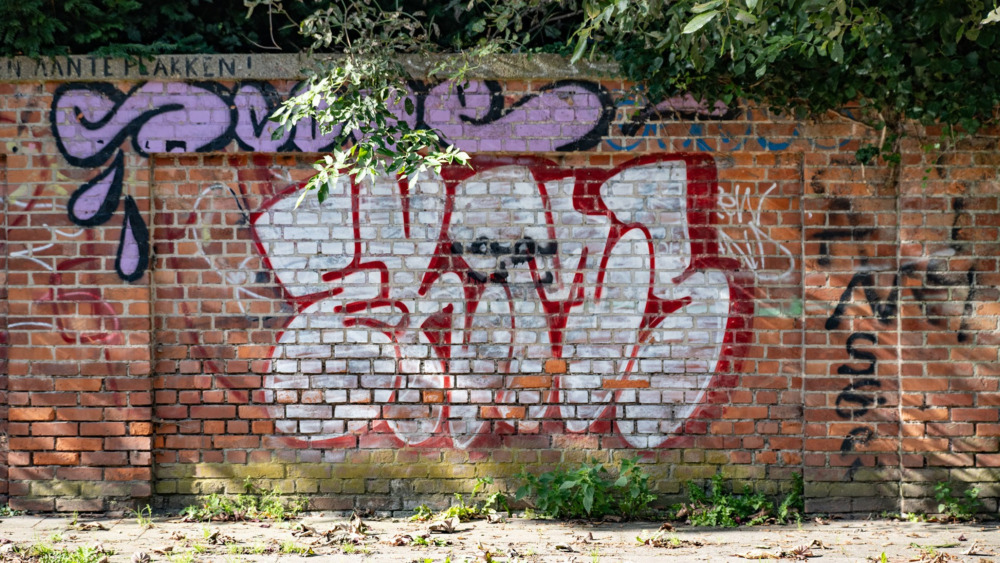
How to remove graffiti step by step
When using a professional graffiti remover, graffiti can usually be removed following a clear process.
Step 1 – Apply the graffiti remover
Apply the remover to the contaminated surface. This can be done using a brush, roller or low-pressure sprayer.
Make sure the product is applied evenly and that the entire graffiti is covered with a thick layer.
Step 2 – Allow the product to dwell
The graffiti remover needs time to break down the paint. During this phase, the binders in the paint are dissolved.
The exact dwell time depends on several factors, such as:
- the type of paint
- the surface
- the temperature
- the thickness of the paint layer
Step 3 – Rinse the surface
After the dwell time, the graffiti can be removed with water. In many cases, a pressure washer is used. Warm water can help remove the loosened paint more effectively.
Step 4 – Repeat if necessary
For stubborn graffiti, it may be necessary to repeat the treatment. This is especially common with older graffiti or surfaces where the paint has penetrated deeply.
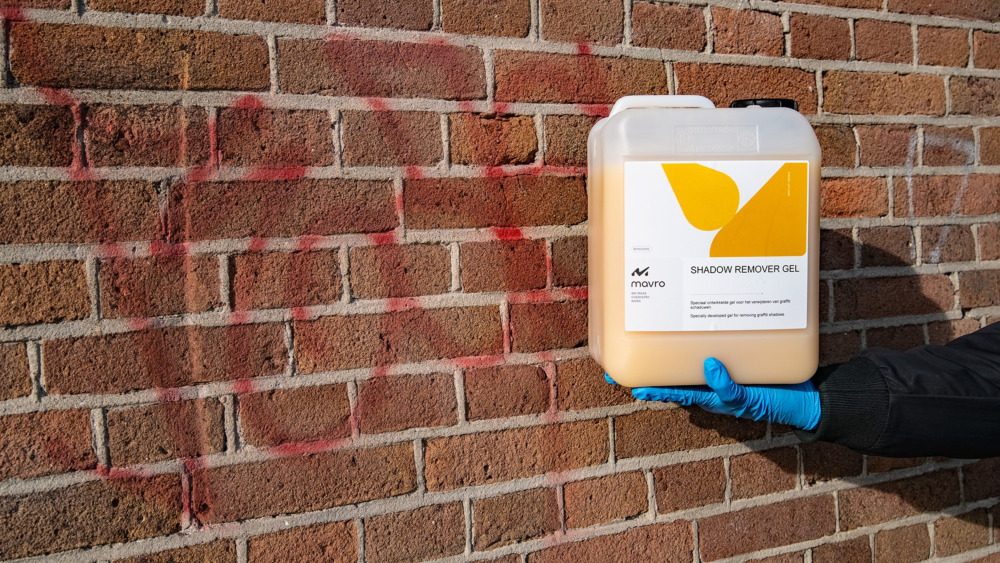
What is graffiti shadow?
Sometimes a light discoloration remains visible after removing graffiti. This is known as graffiti shadow or ghosting.
This occurs because pigments have penetrated deep into the substrate.
Even after removing the paint layer, small pigment particles can remain in the pores of the material.
In such cases, a special shadow remover can be used to eliminate the discoloration.
When should you choose a specialist for graffiti removal?
Although graffiti can often be removed independently, there are situations where it is better to involve a specialist.
For example when:
- the surface is sensitive
- the area is large
- previous attempts were unsuccessful
- the type of paint is unknown
Prevent graffiti with an anti-graffiti coating
Removing graffiti takes time and effort. That is why more and more organizations are choosing a preventive approach.
An anti-graffiti coating creates a protective layer on the surface. This reduces paint adhesion. When new graffiti is applied, it can be removed much faster and more easily.
The advantages of anti-graffiti protection include:
- faster graffiti removal
- lower maintenance costs
- protection of facades and structures
View all solutions for graffiti removal
https://mavro-int.shop/en/antigraffiti/removal
Or discover solutions for anti-graffiti protection
https://mavro-int.shop/en/antigraffiti/protection
Effective graffiti removal starts with the right approach
Removing graffiti is often more complex than it seems at first glance. Different types of paint, different surfaces and the level of contamination mean that each situation requires a different approach.
By using professional graffiti removers and the right cleaning method, you can remove graffiti effectively without damaging the surface.
In addition, protecting surfaces with an anti-graffiti coating helps make future cleaning faster and easier.
Want to learn more about removing or preventing graffiti? Explore the solutions in our webshop or contact us for advice on the best approach for your situation.