Permanent marker on plastic, metal and glass can be difficult to remove. The ink adheres to the surface and may smear during cleaning. An incorrect method can also cause scratches, discolouration or differences in gloss.
In this blog, you will learn how to remove permanent marker in a controlled way with Ink Remover. You will discover how to assess the substrate, carry out a test patch and determine the correct contact time. You will also learn which approach suits plastic, painted metal and glass.
You will also get practical guidance on using a microfibre cloth, a white pad and a melamine sponge. This helps you prepare, carry out and check the treatment carefully.
Targeted removal of permanent marker
Permanent marker on a wall panel, seat back, door, waste bin or window requires a targeted approach. The marking may look simple, but the combination of ink and substrate determines how the removal process will go. The wrong cleaner can smear the ink. Excessive mechanical action can cause scratches or differences in gloss.
Ink Remover has been developed for markers, paint markers, felt-tip pens and other inks. This liquid remover contains special solvents and surfactants. The product is intended for professional use on hard, non-porous surfaces such as façade panels and glazed tiles.
Ink Remover is also used on trains, metros, buses, waste bins and other street furniture.
A good result does not start with hard scrubbing. First inspect the marking, the finish and the accessibility. Then work with a clean section of the cloth, give the product sufficient contact time and rinse thoroughly. This keeps the treatment controlled.

Why is a permanent marker called permanent?
In simple terms, marker ink consists of a solvent, a binder and a dye or pigment dispersion. The solvent keeps the ink liquid while writing and then evaporates. The binder then ensures that the colouring components adhere to the surface.
Does marker ink always remain permanently?
The term permanent means that the marking withstands normal use and does not simply disappear with water. On a non-porous material, the colour layer mainly remains on the surface. A suitable remover can loosen the binder and colour layer again.
On a porous material, ink can penetrate more deeply. This makes the treatment more complex.
Why is water alone often insufficient?
Many permanent markings are no longer water-soluble once they have dried. Water can remove loose dirt, but it does not always reach the binder sufficiently.
Additional rubbing with a wet cloth can sometimes spread the colour over a larger area. A specialised remover targets the chemical composition of the ink.
What type of substrate are you dealing with?
Plastic, painted metal, glass and glazed tiles are often smooth, but not every surface reacts in the same way. There are many types of plastic. A painted panel has a different top layer from bare metal. Glass may also have a film, print or coating.
Always check the material and its condition before application.
What should you look for during inspection?
- Scratches, wear or existing discolouration.
- A matt or glossy finish.
- Films, stickers, prints and sealant joints.
- Previous repairs or local paint layers.
- Multiple colours or layers of marker.
- A marking that has already been partially smeared.
If in doubt, make a test patch in an inconspicuous area. Use the same contact time, cloth and after-treatment as in the final method.
Only assess the area after it has dried. Wet surfaces can temporarily show a different level of gloss.
When do you choose Ink Remover?
Ink Remover is suitable for removing marker and ink from hard, non-porous substrates. Its liquid form allows controlled application with a microfibre cloth, so the product does not need to be spread over the entire object.
Why apply the product with a cloth or melamine sponge?
A microfibre cloth gives you control over the amount of product and the area being treated. This allows you to wet the ink without unnecessarily wetting adjacent areas.
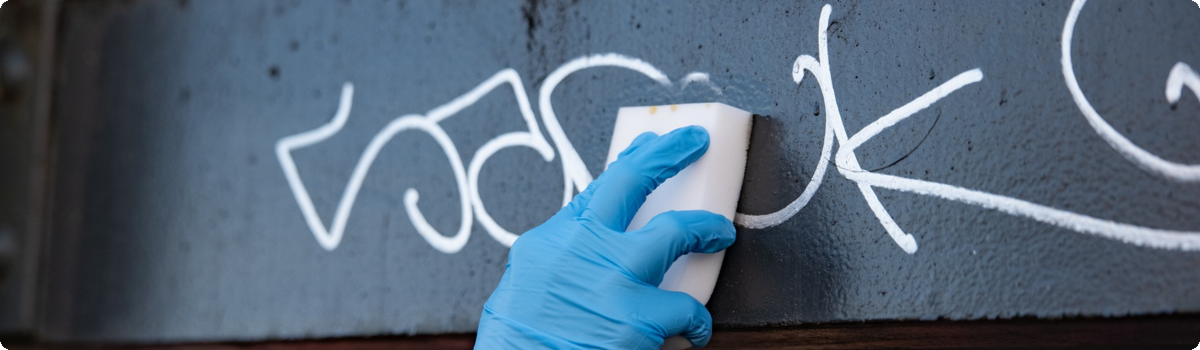
For stubborn markings, you can also use a melamine sponge. Apply Ink Remover to a clean, dry microfibre cloth or melamine sponge and treat the marking. Test the chosen method first in an inconspicuous area.
When is Ink Remover Gel the better choice?
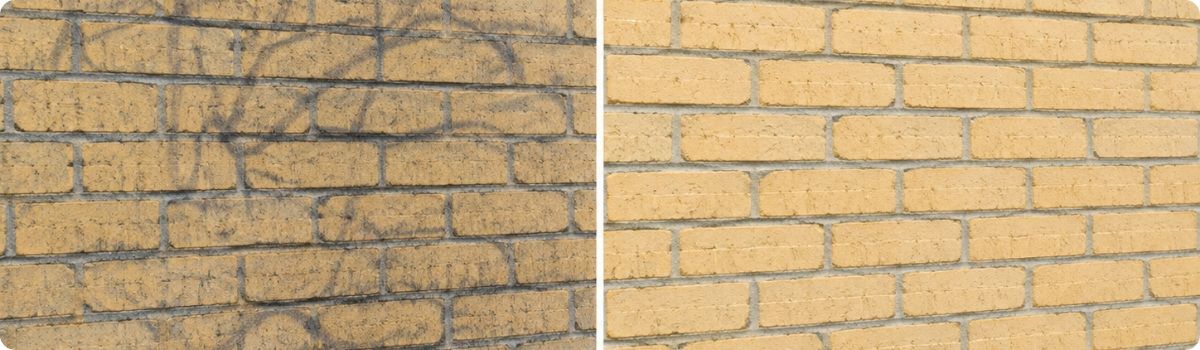
For porous substrates such as masonry and concrete, the gel-form Ink Remover Gel is a suitable choice. The gel remains on vertical surfaces for longer.
Make this product choice before starting the treatment. A liquid treatment on highly absorbent material can penetrate deeper into the pores or be absorbed too quickly.
How do you remove permanent marker step by step?
- Cordon off the work area and ensure sufficient ventilation.
- Check the substrate, existing damage and adjacent materials.
- Carry out a test in an inconspicuous area.
- Apply Ink Remover to a clean, dry microfibre cloth or melamine sponge.
- Spread the product over the marking with the cloth.
- Allow the product to work for five to thirty minutes.
- Wipe away the dissolved ink with a clean section of the cloth.
- If necessary, support the treatment with a white pad or melamine sponge.
- Rinse thoroughly with clean water.
- Dry the surface and carry out a final check.
Why should you keep using a clean section of the cloth?
The cloth absorbs dissolved dye and binder. If the same dirty section is repeatedly moved over the surface, the ink can be redistributed.
Fold the cloth regularly and replace it when no clean sections remain. Work from the outside of the marking towards the centre if there is a risk of spreading.
How do you determine the correct contact time?
Use a contact time of five to thirty minutes. Temperature, type of ink, layer thickness and age all influence the reaction.
Check a small area during the process. Do not immediately start rubbing hard. Give the product time to loosen the marking and prevent it from drying out.
What does a white pad or melamine sponge do?
A white pad can provide light mechanical support for stubborn residue. A melamine sponge has a fine structure and also works mechanically.
Only use these aids after the chemical reaction has had sufficient time to take place. Test the combination first, because even a fine structure can alter a delicate glossy finish.
Why is more pressure not a standard solution?
Additional pressure increases friction. This may remove the marking, but it can also dull the top layer.
On plastic or painted metal, a local difference in gloss is immediately noticeable. Therefore, start with sufficient contact time, a clean section of cloth and limited movement. Increase the mechanical action only after a successful test.
How do you prevent damage to plastic?
Organic solvents can affect certain types of plastic. That is why a material test is important. Plastic is not a uniform substrate. Its composition, age and finish determine how the material reacts to a cleaner.
How should you treat painted metal?
Painted metal has a protective coating that may be older than the visible marker. Wear, previous repairs and cleaning can reduce resistance locally.
Pay particular attention to edges, damaged areas and transitions. Do not automatically treat the entire panel just because one area has been marked.
Is bare metal the same as painted metal?
No. Bare metal does not have an organic paint layer that can be affected by a cleaner. However, surface treatment, oxidation and the visible finish can still be important.
Use a test patch in both situations. Prevent dissolved ink from remaining in joints or around fixings.
Can you remove marker from glass?
On ordinary, undamaged glass, marker ink remains on the surface. This often makes controlled removal relatively straightforward.
However, check whether the glass has a film, print, tint layer or functional coating. Treat these components as separate materials.
Why should glass also be rinsed thoroughly?
Rinse glass thoroughly with clean water to stop the action of the product. This prevents residue and helps remove loosened dye completely.
Also clean edges and rubber seals where liquid may have collected. Then dry with a clean cloth and inspect the area in grazing light.
Which conditions affect the application?
Use Ink Remover in dry weather conditions. Low temperatures can slow down its action.
Adjust the contact time accordingly within the stated range. Do not use the product on a hot surface or in direct sunlight.
How do you organise indoor work?
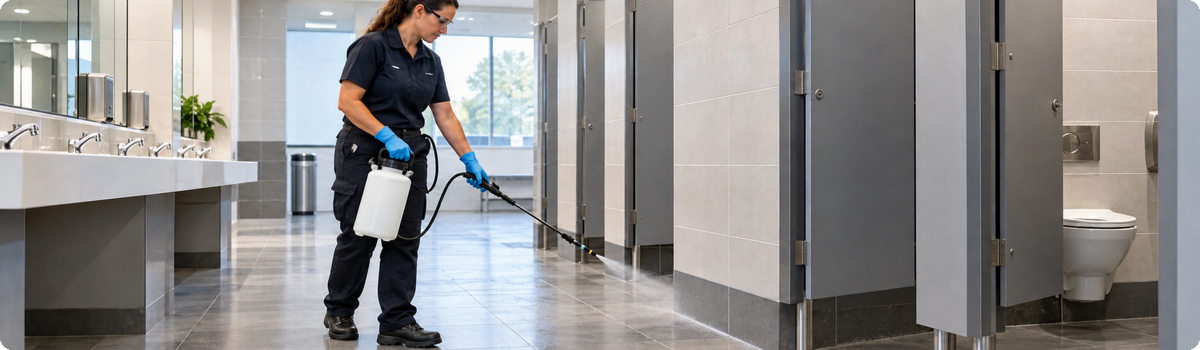
Plan the treatment outside operating hours if passengers or employees could otherwise touch the surface. Cordon off the area and ensure ventilation.
Keep clean water, absorbent material and a waste container within reach. Only release the surface for use after cleaning, drying and inspection.
How do you calculate practical consumption?
Allow for a coverage of five to fifteen square metres per litre on non-porous substrates. Actual consumption depends on the marking and the substrate.
Use this range for initial planning and record consumption per incident.
Which data are useful?
- Object and type of material.
- Area of the marking.
- Type of marker and number of layers.
- Contact time.
- Amount of product used.
- Required cloths and pads.
- Total labour time.
- Result after drying.
After several treatments, you can establish your own benchmark for each material and application. Use this for stock management and planning.
Only compare situations with a similar substrate and type of contamination.
Why does a coloured shadow sometimes remain?
A shadow can occur when dye has penetrated pores, damaged areas or a weathered top layer.
Continuing to scrub with the same product is not automatically the correct next step. First check whether the original ink layer has actually been removed and whether the remaining discolouration is in the substrate itself.
When should you ask for technical advice?
Ask for advice when dealing with an unknown substrate, valuable printing, recurring shadowing or an unusual reaction.
Mavro can help with product selection and setting up a test. For advice, contact us on +31 418 680 680 or info@mavro-int.com.