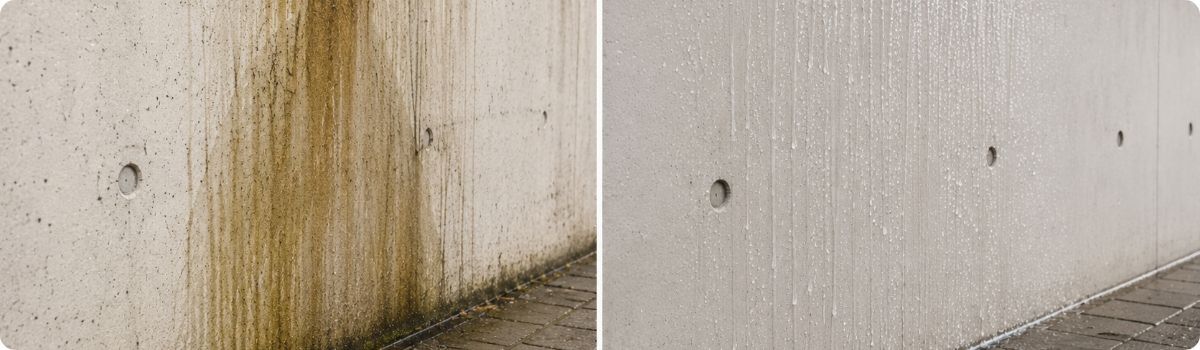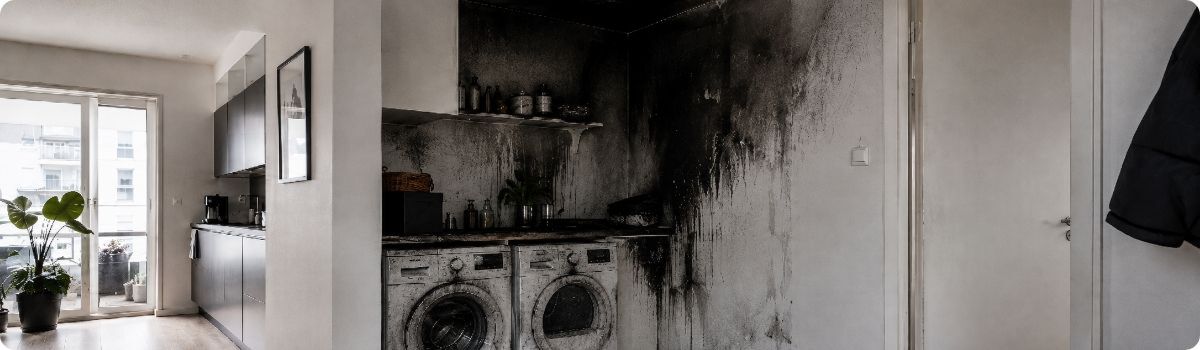
Soot is a dark contaminant produced during combustion. You can find it on walls around fireplaces, on ceilings after smoke exposure and in garages, workshops and industrial areas. After a fire, soot deposits can spread through a large part of a building.
The black colour makes soot immediately visible. However, the main challenge is not just its appearance. The particles are tiny, adhere easily to surfaces and can combine with grease, oil or other combustion residues to form a stubborn layer.
For professional cleaning companies, removing soot therefore requires an understanding of the contamination and a cleaner that genuinely loosens the particles. In this blog, you will learn what soot is, why it is so difficult to clean and how to remove soot deposits professionally.
What is soot?
Soot is a collective term for fine carbon-containing particles that form when fuel or other material does not burn completely. In complete combustion, fuel and oxygen react as fully as possible. When there is insufficient oxygen, a low combustion temperature or poor mixing, more unburned particles remain.
These particles leave the combustion source with smoke and hot air. As soon as they cool, they settle on nearby surfaces. This creates the familiar black or dark-grey deposit on walls, ceilings, stone, metal and other materials.
Soot is not the same in every situation. Its composition depends on the material burned and the conditions during combustion. Wood, diesel, oil, plastics and furnishings can each leave behind a different mixture of particles and residues.
How does soot form?
Soot mainly forms during incomplete combustion. The flame does not receive enough oxygen or the fuel does not burn evenly. Temperature and duration of combustion also affect the amount of particles produced.
A candle, for example, can leave a dark deposit when the flame burns unevenly. In a garage, exhaust fumes and technical work can contribute to soot contamination. In a production environment, soot may be mixed with oil, grease and metal particles.
After a fire, the situation is often more complex. Different materials burn at the same time and smoke carries soot particles through rooms, corridors and air currents. As a result, smoke damage after a fire can become visible in places that are not directly next to the source of the fire.
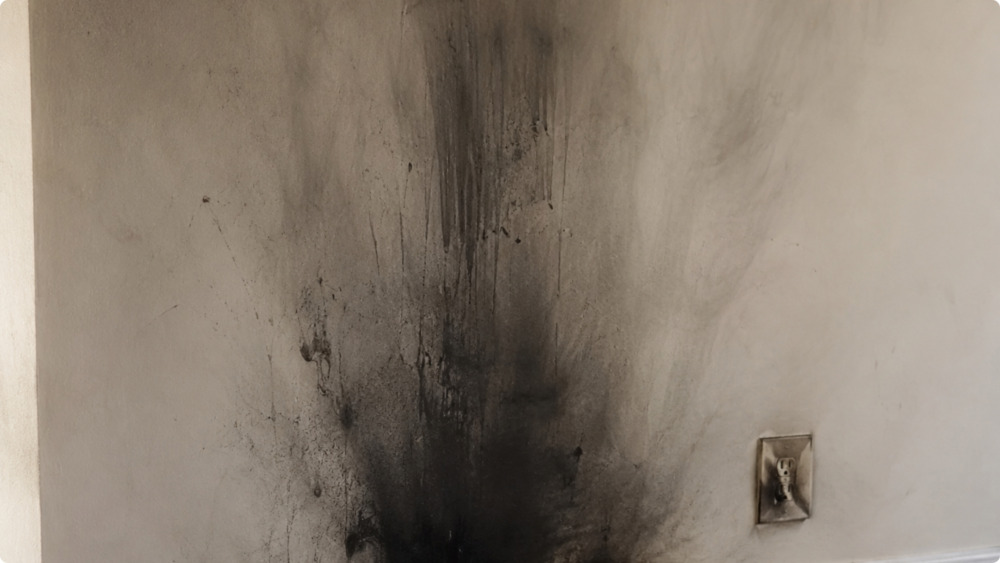
Why is soot black?
The dark colour mainly comes from the carbon-rich particles. These particles absorb a large amount of visible light, giving the contamination a black or dark-grey appearance. Even a thin layer is quickly noticeable on a light wall, ceiling or tiled surface.
The colour can vary depending on the contamination. Dry soot can appear matt and powdery. Deposits containing oily or greasy residues may look darker and glossier. The colour and texture of the substrate also influence how visible the contamination is.
Removing black soot requires complete removal of the loosened particles. If some remain on the surface or are spread with a dirty cloth, grey streaks and smears can easily appear.
Why is soot so stubborn?
Soot particles are extremely small. This allows them to settle in pores, joints, textured surfaces and small irregularities. On a smooth surface, contamination tends to remain on the outside. On rough stone or a textured wall, the contact area is larger and soot can penetrate deeper into the structure.
In addition, soot does not always consist of dry carbon alone. Combustion can produce greasy, oily and other organic residues. These residues act as a binding layer around the fine particles. Water alone is usually not sufficient to loosen this type of contamination.
Time also plays a role. Fresh deposits are often more loosely attached than contamination that has been present for longer. Heat, moisture and use of the area can cause the layer to adhere even more strongly. Cleaning soot damage can therefore require more than a single superficial treatment.
Where do soot deposits occur?
Soot is often associated with fire, but professional cleaning companies encounter it in many other environments. Garages, workshops, machine rooms, production areas and factories can all develop dark soot deposits.
In garages and technical areas, soot may be combined with exhaust-related contamination, grease and lubricating oil. In industrial environments, metal particles and process contamination can be added to the layer. This can create a combination that requires targeted alkaline cleaning.
After a fire, deposits can occur on walls, ceilings, floors, window frames and parts of installations. Smoke rises with warm air and then spreads through openings and adjoining areas. Visible contamination can therefore extend much further than the location where the fire started.
What is the difference between soot, smoke damage and fire damage?
Soot is the dark particulate contamination left behind on a surface. Smoke damage is a broader term. It includes visible deposits, odour, discolouration and contamination spread by smoke.
Fire damage also includes the direct effects of heat and flames, such as deformed materials, charred parts, detached finishes and structural damage. Removing soot can be part of fire restoration, but it does not restore materials damaged by heat or flames.
This distinction is important in professional services. A cleaning company removes surface contamination within the agreed scope of work. Odour treatment, demolition, structural repair and new finishes may be carried out by other specialists.
Why is water alone often not enough?
Water can remove loose dust, but soot often contains components that do not dissolve easily in water. Especially when grease or oil is present, a dark layer can remain on the surface.
A wet cloth without a suitable cleaner can spread the fine particles over a larger area. On a white wall or ceiling, this can create grey smears. The contamination may look lighter, but it has not been completely removed.
A professional cleaner must therefore do more than simply wet the surface. The formula must loosen the contamination and allow the captured particles to be removed with the cleaning solution.
Why is a general-purpose cleaner not always sufficient?
A general-purpose cleaner is suitable for many types of everyday dirt. Heavy soot deposits after a fire or in an industrial environment have a different composition and adhesion. A solution that is too mild may remove part of the deposit while leaving a dark haze behind.
When removing soot from walls, the combination of chemical action, contact time and thorough wiping is particularly important. The cleaner must be strong enough to loosen the contamination without requiring employees to apply increasing mechanical pressure.
A concentrated professional soot remover provides greater flexibility in dosing. Light deposits can be treated with a higher dilution. A stronger solution can be used for heavy soot contamination.
How do you remove soot professionally?
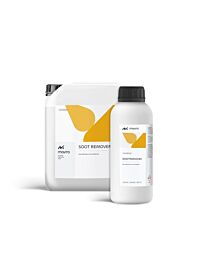
Professional soot removal starts with a cleaner suitable for heavy carbon-based, greasy and industrial contamination. Soot Remover was developed for this purpose. Its strong alkaline formula loosens soot particles and suspends them in the cleaning solution.
The cleaner can be used on alkali-resistant surfaces in garages, workshops, production areas and factories, among other locations. When cleaning after fire damage, the product also helps remove heavy soot deposits from suitable walls, ceilings and other surfaces.
Soot Remover is also effective on combinations of soot, lubricating oil, grease and metal particles. This makes it suitable for professional environments where several types of heavy contamination are present at the same time.
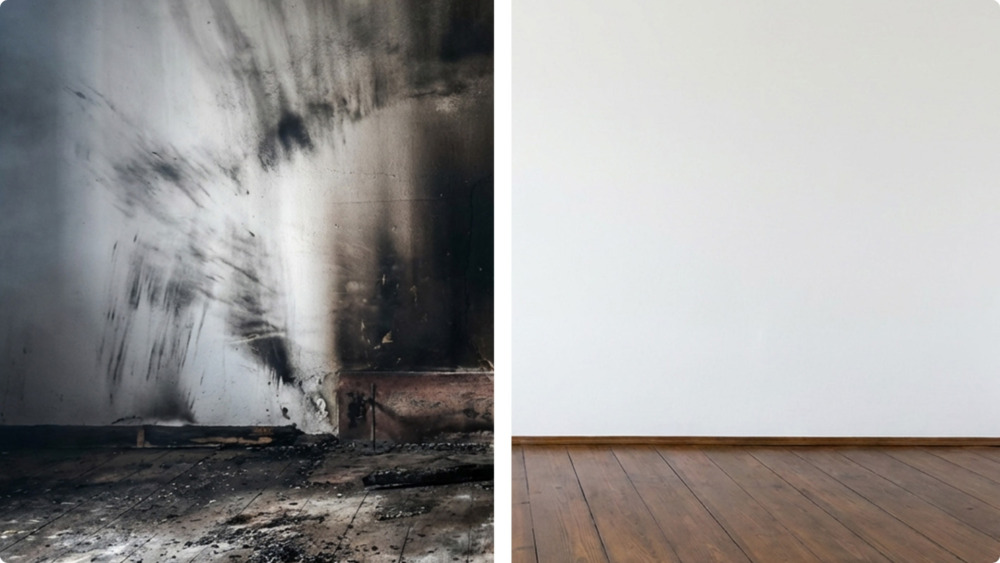
How do you adjust the dilution to the level of contamination?
Soot Remover is highly concentrated and can be diluted depending on the level of contamination. For light deposits, a guideline of 1:50 applies. For heavy contamination, a ratio of 1:3 can be used.
For extremely heavy soot damage, the product can be applied undiluted. This means the same cleaner can be used for light soot deposits, industrial contamination and heavy post-fire cleaning.
The dosing options are particularly relevant for cleaning companies. Teams can work with one familiar product and adjust the working solution to the level of contamination. Recording the dilution used also supports job costing and stock management.
How do you apply the soot remover?
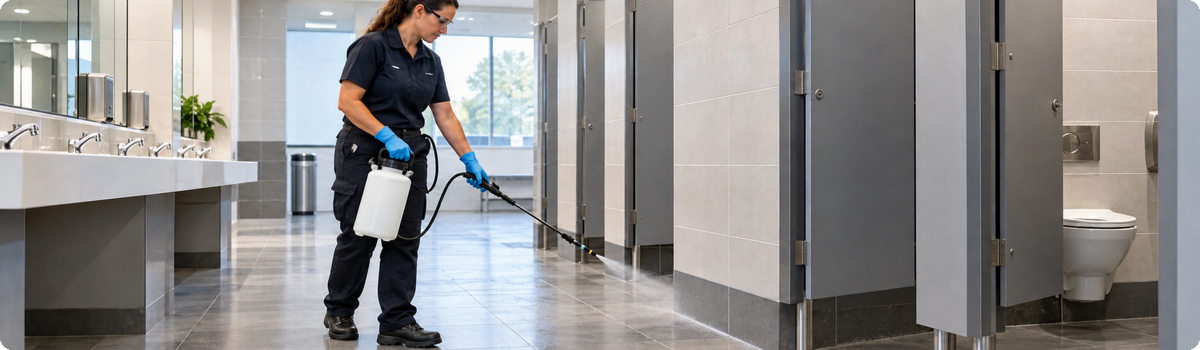
Apply the cleaner with a low-pressure sprayer, microfibre cloth or brush. A cloth is suitable for smaller, smooth surfaces. A brush helps distribute the solution over textured surfaces and localised deposits.
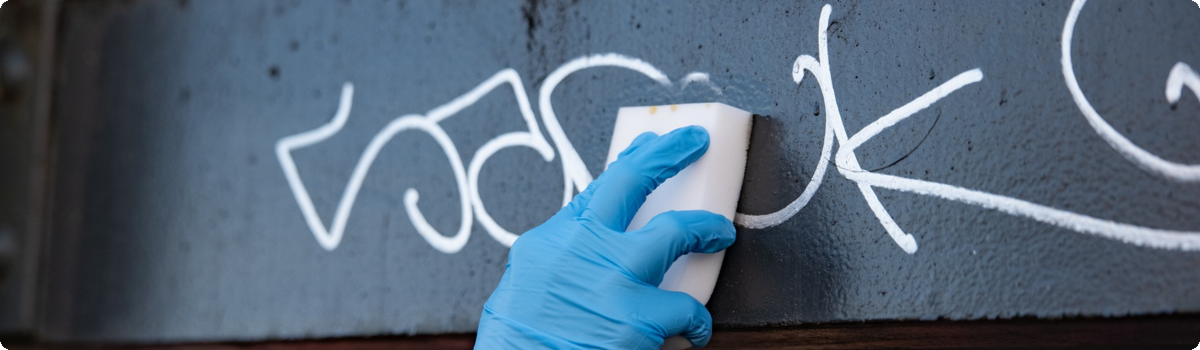
Allow the product to work for several minutes. During this time, the alkaline formula loosens the contamination. A white pad or power sponge can support the cleaning action on materials that can withstand this mechanical treatment.
Then wipe the surface with water and a clean microfibre cloth. Replace cloths in time. A cloth that has already absorbed a lot of soot can redistribute black particles over the surface.
How do you remove soot from walls and ceilings?
Removing soot from walls requires even distribution of the cleaner and enough clean cloths for wiping. Work in sections that can be fully treated within the contact time. This reduces streaking and prevents loosened soot from drying again.
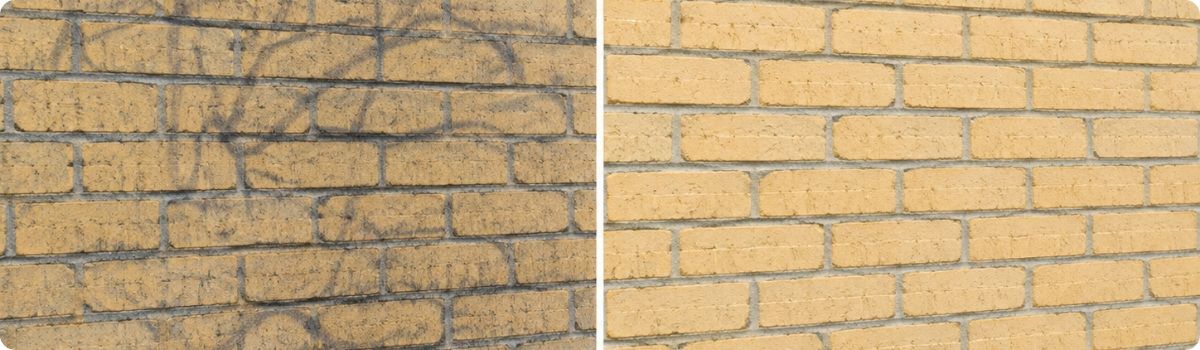
When removing soot from a stone wall, texture and porosity must be taken into account. A brush can help distribute the cleaning solution over a rougher surface. Only use the product when the substrate is alkali-resistant.
Removing soot from a ceiling requires control over mist and run-off. A cloth or brush provides good control on smaller sections. For larger surfaces, a low-pressure sprayer can be used with suitable personal protective equipment.
What protection is required for professional use?
Soot Remover is strongly alkaline. Avoid contact with skin and eyes. Wear suitable gloves, protective clothing and safety glasses. Do not inhale spray mist.
Do not use the cleaner on alkali-sensitive materials. Aluminium and plexiglass require extra caution. Never mix the product with other cleaners and keep it away from acidic products.
Store the packaging in a ventilated, cool and frost-free place. Always consult the latest safety information and instructions for use before application.
Why is Soot Remover suitable for professional cleaning companies?
Professional jobs vary in scale and degree of contamination. A garage wall with light deposits requires a different concentration than severe soot damage after a fire. The wide dilution range gives cleaning companies flexibility across different applications.
The cleaner is fully biodegradable and contains bio-based surfactants. The product is available in a 5-litre pack.
Because the formula is also effective on grease, lubricating oil and metal particles, one product can tackle several types of heavy contamination in a professional environment. This keeps product selection clear for both employees and purchasers.
Removing soot requires the right chemical action
Soot is a fine carbon-containing contaminant that forms during incomplete combustion. The particles adhere to surfaces and can combine with oil or grease to form a stubborn dark layer. That is why water and a general-purpose cleaner are not always sufficient.
Soot Remover loosens soot particles on alkali-resistant surfaces and supports professional cleaning in garages, workshops, industrial environments and after fires. The dilution can be adjusted for light or heavy contamination.
Looking for a product to remove soot as part of a professional cleaning job? Request product advice or call +31 418 680 680.