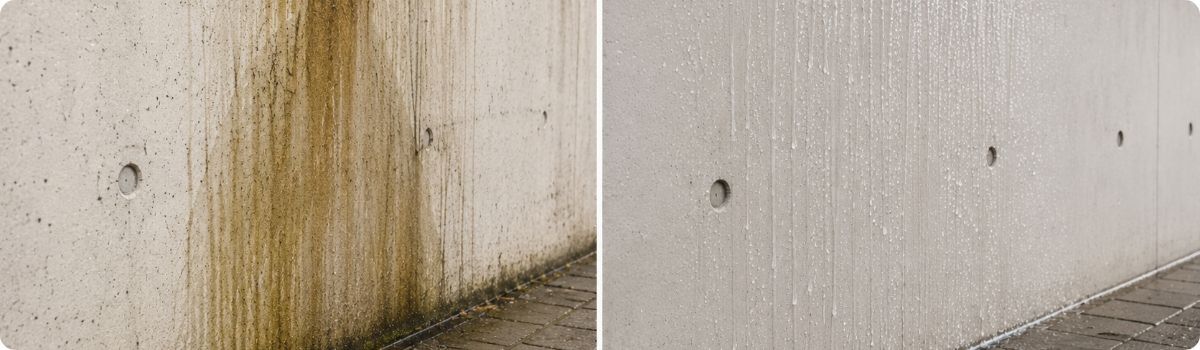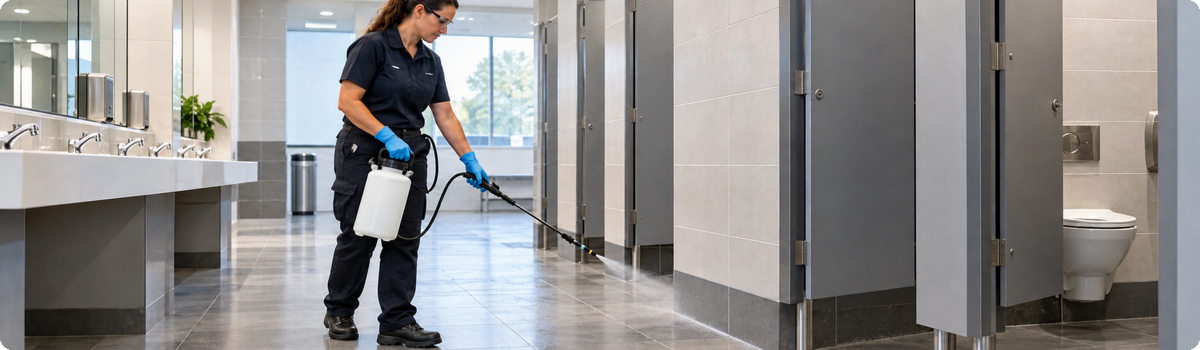
Neutralising odours takes more than adding a pleasant fragrance. In sanitary and public areas, an unpleasant smell can remain noticeable when only the air is freshened. A professional approach focuses on the surface where the odour is present. First clean the relevant area. Then treat the suitable surface with an odour remover that tackles the unwanted smell instead of masking it.
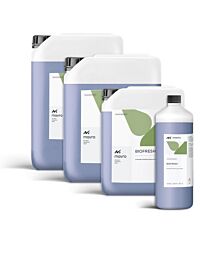
Biofresh Odour Remover is a cleaner with strong odour-destroying action. Bacterial and enzymatic processes break down the odour on the treated surface. Biofresh does not mask the smell. The product is suitable for almost all slightly absorbent and non-porous surfaces, including tiles, porcelain, HPL panels, floors and waste bins. Toilets and changing rooms are also suitable applications.
This blog explains what odour neutralisation means, how an odour remover works and which product is suitable for sanitary areas and public facilities. You will also read how to apply Biofresh effectively and why an odour can return later when the area is used again or when the original cause remains present.
What does neutralising odours really mean?
Neutralising an odour means tackling the unwanted smell directly. The term is used in the market for different types of action. Some products mask odours. Others absorb odour molecules or convert them. That is why it is important not to focus only on the word “neutralise”, but also on the stated action and intended application of the product.
Masking an odour or destroying it
An air freshener releases a fragrance into the room. The new scent may temporarily overpower the unpleasant smell while odour residues remain on the surface. Once the fragrance becomes weaker, the original odour may become noticeable again. This approach mainly affects how the air smells rather than treating a contaminated floor, joint or waste bin.
Biofresh Odour Remover works differently. Bacterial and enzymatic processes destroy the unwanted odour on the treated surface. At the same time, the product cleans the surface. This makes Biofresh suitable for situations in which cleaning alone does not yet deliver the desired odour result.
Why odour neutralisation starts at the surface
We experience odours in the air, but the area that needs treatment is often a surface. In a sanitary area, this may be a tiled floor, joint, toilet zone or waste bin. In a public area, the relevant zone may be around a waste point, changing room or shared sanitary facility. By cleaning and treating that surface directly, you address the area where the odour remains present.
Ventilation remains important. Fresh air helps renew indoor air and supports a pleasant environment. Ventilation does not, however, remove contamination attached to a surface. Therefore, combine air exchange with cleaning and an appropriate surface treatment. This gives each measure a clear role within the cleaning process.

How does an odour remover work?
An odour remover can work in different ways. One formula masks odours, while another absorbs or converts odour molecules. A professional choice therefore starts with the product’s mode of action and the type of surface. Biofresh is an odour remover. Bacterial and enzymatic processes target the unwanted odour on the surface to which the product is applied.
Bacterial and enzymatic action
The bacterial and enzymatic action makes Biofresh suitable for odour treatment after regular cleaning. The product is applied directly to the relevant surface and destroys the odour present there. This differs from an automatic fragrance system that periodically disperses perfume into the air. Biofresh focuses on the treated surface and also cleans that surface.
Why an odour can return later
Biofresh does not mask odours. Nevertheless, an unpleasant smell can develop again over time. This happens when new contamination reaches the surface or when an existing cause has not been resolved. A waste bin is filled again. A toilet receives new visitors. A leak keeps a floor damp. In these situations, a new odour develops or the source remains active.
If an odour complaint returns, investigate what has changed since the previous treatment. Check the treated area and its immediate surroundings. Determine whether renewed cleaning is required or whether a technical specialist needs to intervene. By not automatically applying more product, the approach remains targeted and unnecessary consumption is avoided.
What is an effective product against unpleasant odours?
An effective product against unpleasant odours should suit the surface, the area and the intended working method. It should tackle the odour instead of simply adding perfume. The application method, suitable materials and safety measures should also be clear. A practical product fits well into the existing cleaning process.
Biofresh is such a product. It does not mask odours with perfume, but destroys unwanted odours through bacterial and enzymatic processes. Biofresh also cleans the treated surface.
Which surfaces can you treat?
Biofresh can be used on almost all slightly absorbent and non-porous surfaces. Tiles, porcelain, HPL panels, floors and waste bins are suitable applications.
How do you remove an unpleasant smell from a sanitary area?
Removing an unpleasant smell from a toilet or changing room starts with a fixed sequence. Inspect the area and determine which zone needs extra attention. Remove waste and visible contamination. Clean edges, joints, toilet bases, drainage points and the surface beneath waste bins. Check that ventilation and drainage are functioning correctly. Then treat the suitable surface with Biofresh.
How do you apply an odour remover?
Apply Biofresh Odour Remover using a low-pressure sprayer or pour the product over the surface. Choose the method that suits the size and accessibility of the area. The treated surface does not need to be rinsed or wiped afterwards. The theoretical consumption is ten to fifteen square metres per litre.
Which odour remover is suitable for public areas?
An odour remover for public areas must fit intensive use and different location zones. Stations, parking facilities, sports facilities and municipal buildings receive many visitors every day. Sanitary facilities, changing rooms and waste points therefore require a clear cleaning routine. Biofresh can be used as a targeted step in the cleaning process.
Neutralising odours in public toilets
Public toilets often have several critical zones. These include floor edges, joints, connections around toilet bowls, urinals and waste bins. Treat only the areas that still require additional odour treatment after inspection and cleaning. Schedule checks around busy periods so the cleaning team can remove new contamination in time and prevent a small odour complaint from becoming a recurring issue.
Removing odours in changing rooms and sports facilities
Changing rooms combine moisture, intensive use and various non-porous surfaces. Check floors, tiled surfaces, benches with a suitable finish and waste bins. Ensure that the room is well ventilated. Biofresh can be applied to the surfaces and does not need to be rinsed off afterwards. This suits a workflow in which the room needs to be available again after inspection.
Removing unpleasant smells around waste bins
Empty the waste bin and remove leaked residues before using an odour remover. Clean the inside, outside and the floor beneath the bin. Then apply Biofresh to suitable surfaces. Keep in mind that new waste will be added. Once the bin is used again, a new odour may develop. An appropriate emptying frequency and periodic cleaning therefore remain necessary.

Air freshener or odour remover: what is the difference?
An air freshener mainly changes how the air smells. An odour remover treats the area where the odour is present. For an entrance or reception area, fragrance may form part of the facility approach. For a contaminated toilet floor or waste bin, surface treatment is required. The two product types therefore have different functions and are not automatically interchangeable.
Biofresh destroys the unwanted odour on the treated surface. It does not mask it with a temporary layer of perfume. This makes Biofresh relevant for organisations that want to tackle an existing odour directly. Treatment remains linked to cleaning, ventilation and inspection of the location. An odour remover is not a substitute for repairs or an appropriate cleaning schedule.
Frequently asked questions about neutralising odours
What neutralises unpleasant smells?
That depends on the situation. Ventilation renews the air. Cleaning removes contamination. A suitable odour remover treats the odour on an appropriate surface. Biofresh destroys unwanted odours through bacterial and enzymatic processes and cleans the treated surface.
What is the strongest odour remover?
The strongest odour remover is the product that is suitable for the surface and the professional application. Check the mode of action, suitable materials and application method. Biofresh has been developed for slightly absorbent and non-porous surfaces such as tiles, porcelain, HPL panels, floors and waste bins.
How does an odour destroyer work?
An odour destroyer uses biological processes to tackle odours. Biofresh works through bacterial and enzymatic processes. This action destroys the unwanted odour on the treated surface instead of covering it with another scent.
Can an unpleasant smell return after treatment?
Yes. New contamination can create a new odour. A source that remains present can also become noticeable again. If a complaint returns, inspect the area again and determine whether cleaning, renewed treatment or technical repair is required.
Do you need to rinse Biofresh after use?
No. After application, the treated surface does not need to be rinsed or wiped. Apply Biofresh directly to a suitable surface and follow the established work instruction for the location.
Is Biofresh suitable for sanitary areas?
Yes. Biofresh is suitable for toilets, changing rooms, tiles, porcelain, HPL panels, floors and waste bins, among other applications.
Neutralising odours with a targeted approach
Neutralising odours in sanitary and public areas starts with a clear choice. Do you want the air to smell different temporarily, or do you want to tackle the existing odour on a surface? Biofresh destroys the unwanted odour through bacterial and enzymatic processes and cleans the treated surface. This makes the product suitable for a professional approach that goes beyond masking.
First clean the relevant area. Check the surface and resolve any technical issues. Then apply Biofresh directly and assess the result after normal use. If the odour returns, investigate whether new contamination has developed. This keeps odour removal a manageable part of cleaning in toilets, changing rooms, waste areas and other public facilities.
For advice on a specific surface or application, contact Mavro via info@mavro-int.com or +31 418 680 680.